Flower Outline: A Stitching Review for Real Projects
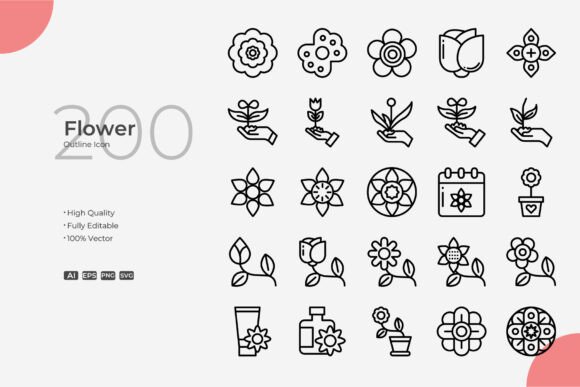
When I first opened the Flower Outline set, my mind didn’t stay on screen graphics. It jumped straight to thread, hoops, and fabric. Two hundred icons, all built around a clean line aesthetic, promised something I rarely see in ready-made machine embroidery design packs—raw versatility. The mood felt botanical but modern, delicate without being fussy. As someone who regularly tests digital artwork for stitchability, I knew this wasn’t a plug‑and‑play embroidery file. But the potential for smart conversion, especially for crafters who build their own files, was obvious.
Most of the outlines use a minimalist stroke style, almost like continuous line drawings. They read more like sketchbook florals than dense vector clip art. That immediately put me in the mindset of a lightweight running stitch approach. I could already picture a daisy icon from the set floating on a natural linen tote, or a tiny wildflower sitting just above the pocket of a baby onesie. If you’re an Etsy seller or small-batch embroiderer, that kind of understated charm sells—especially when you can build a cohesive product line around a single aesthetic spine.
First Look: Clean Lines, Airy Personality
What sets Flower Outline apart is its restraint. There are no bulky fills, no overly complex petal stacks. The shapes stay legible even when viewed at a thumbnail size, which matters enormously when you’re preparing embroidery file artwork for small hoop diameters. A bolder botanical might collapse into a tangled mess at 2 inches. Here, the stems, leaves, and blooms keep their breathing room. I tested several icons mentally against a 4x4 hoop—think monogram corners, collar accents, and ear‑flap motifs on baby caps—and the proportions felt naturally suited.
The set is described as simple and clean, and that’s exactly what you want in an outline‑based embroidery source. Editable stroke weight means you can fatten up lines for a more pronounced satin stitch look, or keep them whisper‑thin for a subtle sketch effect. Because these are graphics, not pre‑digitized embroidery files, you’ll have total control over how the line translates into stitches. For a custom apparel piece, that’s gold.
Real‑Test Scenario: A Linen Tote with a Purpose
Let me walk you through a real project that I’d trust Flower Outline with. Last month, a client asked for a set of embroidered bridesmaid totes—simple, botanical, no glitter, no cutesy script. I pulled three wildflower outlines from the collection, resized them to about 3 inches tall, and brought them into digitizing software as a stacked vertical cluster. Because the original strokes were consistent in thickness, I could assign a uniform running stitch path without worrying about awkward angle shifts. A light cream thread on oat‑colored canvas, with a single layer of cut‑away stabilizer, and the result was exactly what you’d want in a handmade product: delicate, intentional, and clearly professional.
On the first test stitch, the thread tension stayed calm. No puckering around tight corners—those flower centers and leaf junctions stayed open because the outline style left negative space instead of squeezing details together. That’s a huge win for embroidery designers who’ve dealt with dense, overbuilt artwork that fights the fabric. The finished tote looked like something from a boutique window, and that single project paid for the product many times over.
Where Flower Outline Thrives in Embroidery
For custom apparel, I’d lean heavily on the smaller, airier icons. A single bloom outline on a sweatshirt cuff adds texture without shouting. Across a cap, a horizontal vine or spray of tiny buds from the set can follow the curve of the brim beautifully—better than a rigid, boxy icon ever could. The Flower Outline aesthetic feels naturally wedded to:
- Baby clothes – the motifs are sweet without being overly gendered, and a soft outline stitch sits gently against sensitive skin.
- Tea towels and kitchen linen – a corner sprig in white or coral thread instantly upgrades a simple flour‑sack towel.
- Pillow covers and nursery decor – repeating floral borders read as high‑end, especially in a monochrome thread palette.
- Personalized gifts – combine an outline bloom with a name or date, and you have a wedding or holiday gift that feels bespoke.
- Embroidered patches – the icons are practically designed for clean patch shapes; just add a narrow satin border and a heat‑seal backing.
Because the design language is so uniform across all 200 icons, your brand stays consistent. Whether you’re selling on Etsy or preparing stock for a craft fair, that visual cohesion builds customer trust. Buyers recognize your style even without a logo.
The Cautionary Side: Where You Need to Slow Down
No review from an experienced embroiderer would be complete without a clear look at the tricky spots. Flower Outline, while graceful, isn’t a universal free pass onto every product. Here’s where I’d pause and test carefully:
- Very small hoop sizes – Some icons have thin stems that, when reduced below 1.5 inches, may become fragments of running stitch only a single thread wide. On textured or napped fabric, those details can disappear. Test on a scrap first, and consider bumping the stitch width slightly if your software allows it.
- Stretchy fabrics – T‑shirts and onesies need a water‑soluble topper or a light fusible stabilizer to prevent the outline from shifting during wear. Without it, a crisp line can turn wobbly after the first wash.
- Dark fabrics – Thin outlines in pale thread might look striking, but if the fabric is too dark or the thread blend too close, the motif loses legibility. Always do a black‑and‑white mockup in your digitizing software to check contrast before stitching.
- Curved surfaces like caps – While small icons work, be mindful of the seam zone. A rigidly placed outline can distort on the arch of a cap, so either float the design on a patch or test on an identical blank.
- Frequent washing items – Thin satin outlines may not hold up as well on heavily laundered items. A fill stitch shadow behind the outline can help anchor it, or choose a denser thread ply for durability.
I also recommend a quick trial on fabric texture extremes. Fluffy terry cloth will swallow a fine line, while tightly woven canvas will show every stitch. Knowing your ground fabric means you can adjust the digitizing, not the design itself.
Designer Notes for Your Embroidery Business
Before you turn Flower Outline into a finished product for sale, a handful of practical steps make the difference between a stressful redo and a smooth order run:
- Test, then test again. Stitch out at least three icon variations on the exact fabric and color you plan to use. Check for thread breaks, tension pulls, and visual balance.
- Review stitch density. Since these are outlines, a simple running stitch might look sparse; a miniature satin stitch with slightly wider stroke weight can give a more luxurious hand feel. Your digitizing software’s preview is your best friend.
- Check thread color contrast. Hold a gray‑scale printout next to your thread spools. If the value blends too closely, swap threads before you waste stabilizer.
- Confirm hoop size match. Don’t guess. Measure the longest dimension of the resized design and leave at least half an inch clearance inside the hoop frame for stable stitching.
- Mind the tiny details. Some flower centers have looped petals or delicate stamen lines. At a small scale, those may need to be simplified or omitted to avoid thread buildup.
- Licensing matters. The product page mentions use across websites, apps, and print. That’s promising for commercial work, but I always advise checking the specific license for finished embroidered items and digital embroidery file resale. Protect your shop by being certain.
For those creating printable mockups or design assets to show clients, these outlines render beautifully in digital previews. A crisp vector flower on a mockup sweatshirt can close a sale, and the light hand of the real stitch will match the expectation—no heavy, bulletproof stitching that surprises a buyer expecting softness.
From Screen to Stitch: A Worktable Verdict
After working with comparable outline sets across dozens of client orders, I can say Flower Outline fills a genuine gap. It isn’t a pre‑made embroidery file pack that locks you into someone else’s stitch choices. It’s a thoughtfully edited Graphics collection that plays to the strengths of a designer who understands how thread behaves. You get 200 icons, meaning you can assemble fresh combinations for every season—holiday embroidery with a mistletoe outline, Valentine’s buds, or perennial daisies for spring markets.
My biggest takeaway? The simpler the line, the more professional the final product tends to look when stitched. Overworked designs often read as cheap; Flower Outline’s restraint elevates a simple tote bag design into something that feels hand-curated, not mass-produced. That’s the exact message you want in a craft business or boutique setting. Your customers will notice the finesse, even if they can’t name the technique.
For small shop owners, apparel decorators, and creative entrepreneurs, this collection offers a reliable backbone for a cohesive handmade line. Just remember: always stitch a sample, respect your fabric’s personality, and don’t be afraid to adjust line weight for the real world. The screen design is a sketch; your embroidery machine and eye finish the story.