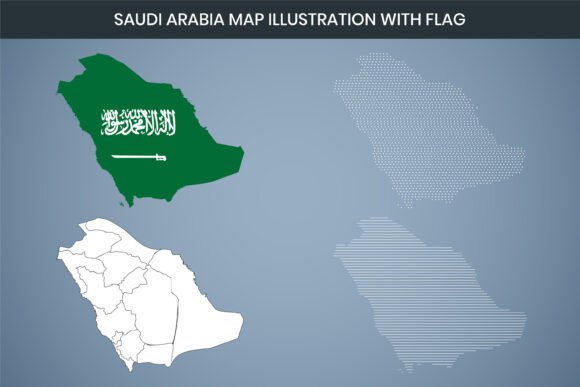
Saudi Arabia Map Illustration with Flag
First Look at a Clean, Instantly Recognizable Outline
As soon as I opened the file, I felt that calm sense of getting a design that knows exactly what it wants to be. The Saudi Arabia Map Illustration with Flag doesn’t overcomplicate things. The map silhouette is crisp, the flag element sits neatly within the country’s shape, and the entire composition reads clearly even when I zoomed out to thumbnail size. That clarity matters immensely when you’re thinking about how a design will translate into thread on fabric.
There’s no visual noise here. The artwork gives off a quiet, grounded mood — something that feels respectful, deliberate, and perfect for heritage-inspired products. I immediately pictured this stitched in a single rich green on a natural linen tote bag, the palm tree and sword emblem simplified just enough to hold up beautifully under a satin stitch.
Because the file is offered as a 3000 x 2000 pixel, 300 DPI graphic in RGB color mode with a laser-cut-ready shape and fully editable layers, my first thought wasn’t just about printing. I was already mentally digitizing it, planning stitch angles, and deciding whether to treat the flag as an appliqué section or build it entirely with fill stitches.
Where This Map Design Feels Right at Home
I’ve tested and reviewed enough embroidery files to know that not every map illustration is cut out for stitching. Some are too detailed, some get muddy on textured fabric, and some lose their soul once you shrink them to a wearable size. The Saudi Arabia Map Illustration with Flag dodges those problems because its strength lies in bold simplicity. The outline is smooth without unnecessary coastal jaggedness, and the flag element is integrated in a way that doesn’t rely on tiny borderline details.
Realistically, here’s the kind of project lineup where I’d use this without hesitation:
- Custom apparel: a left-chest placement on a heavyweight sweatshirt, stitched in a tone-on-tone palette or a contrasting thread that pops against the fabric.
- Tote bags and canvas pouches: a centered, substantial embroidery that turns a plain accessory into a thoughtful gift or a boutique-ready product.
- Embroidered patches: digitized with a border and merrowed edge for sew-on or iron-on application, especially for travelers, cultural events, or small-shop merchandise.
- Pillow covers and tea towels: a single-color or two-tone version that adds a subtle, sophisticated statement to home décor without feeling overly themed.
- Caps and dad hats: the flag element on the front panel, keeping the stitch count manageable and avoiding density issues on curved surfaces.
And because the original file can be opened in Canva and is provided as a print-ready PDF and transparent PNG, I can build presentation mockups for clients without ever leaving my design workflow. Showing a buyer what the finished embroidery will look like on a mockup sweatshirt or tote bag before I ever hoop the fabric builds trust, and this graphic makes that step painless.
Translating a Laser-Cut Graphic into an Embroidery Project
One thing I always remind fellow makers: a beautiful vector or raster illustration doesn’t automatically become a good machine embroidery design. You have to think about how the file’s structure will influence stitch types. The good news here is that the Saudi Arabia Map Illustration with Flag arrives with a clean separation between the map outline and the internal flag graphic, and being fully editable means I can isolate those layers before digitizing.
In my own test, I traced the main map boundary and assigned a medium-width satin stitch to create a defined edge. For the flag, I built a simple flat fill for the green field, then reduced the emblem to a minimal running stitch outline that retains the character without becoming dense or puckered. Because the source resolution is 300 DPI and the dimensions are generous, I didn’t have to struggle with fuzzy edges or guesswork while digitizing — the reference was sharp, even when I zoomed in to check small corners.
However, if you’re planning to stitch the full color flag interior with multiple thread changes, be mindful of stitch density. The white elements within the emblem can get muddy if you push the design too small. My recommendation is to keep the finished embroidery at least 3.5 to 4 inches wide for a detail-rich version, or simplify to a single-color silhouette or two-color design for smaller placements like collar points, cuffs, or baby onesies.
Where I’d Pause and Test First
No design is one-size-fits-all, and this map illustration does require some honest testing before you offer it on every product. Here’s where I would be extra cautious:
- Small hoop sizes: The 4x4 hoop community is huge, but this design’s emblem details and map proportions really shine at 5x7 or larger. At under 3.5 inches wide, you risk losing the flag’s identity.
- Stretchy or thin fabrics: Knit t-shirts and lightweight jerseys can pull or distort a map shape, especially with dense fill stitches. A good cut-away stabilizer and a baste-down stitch will be non-negotiable here.
- Textured backgrounds: Towels, fleece, and heavily napped fabrics easily swallow thin satin outlines. I’d increase the satin width slightly and run a test stitchout on scrap terry cloth before committing to a finished product.
- Dark fabrics: The green of the flag and the map outline can blend into navy, charcoal, or black if you don’t carefully choose thread colors. Lightening the green just slightly or adding an underlay in a bright white or cream thread can save the design’s readability.
- Frequent washing items: If this design goes onto a kitchen towel or a baby blanket that will see lots of laundry cycles, I’d want to confirm the stitch security, especially at the narrow tip of the map or any sharp internal corners.
The Real Value for an Embroidery Business Owner
Let me step into the shoes of an Etsy seller or craft fair vendor for a moment. The Saudi Arabia Map Illustration with Flag isn’t just a digital download; it’s a visual asset that communicates pride, heritage, and clean design. Products featuring this design often connect emotionally with buyers — whether it’s a personalized going-away gift, a holiday present for family abroad, or a subtle statement piece for someone who appreciates minimalist cultural motifs.
When a customer sees an embroidered version of this map on a high-quality tote bag, a neatly finished sweatshirt, or a stitched patch on a jean jacket, they’re not just evaluating the thread work. They’re reacting to the accuracy of the shape, the crispness of the flag, and the overall presentation. A sloppy digitization or a poor source file can ruin that trust in seconds. That’s why starting with a file that’s already clean, editable, and high-resolution matters so much. It shortens your design-to-product timeline and increases the likelihood of a positive buyer review.
I’ve also used similar map designs as part of layered wall art for nurseries, combined with name embroidery underneath. In that context, the Saudi Arabia Map Illustration with Flag would sit beautifully in a hoop frame, stitched on linen or cotton, with a child’s name or birth date in a soft script below. Because the file comes with a PNG and PDF, I can create a printable mockup of that exact layout and share it with the customer for approval, reducing back-and-forth and revisions.
Practical Designer Notes Before You Stitch
Over the years, I’ve developed a list of non-negotiables before I run any new design on my machine, and I’d encourage you to do the same with this one. These aren’t critiques of the product — they’re just the habits that separate a professional result from a frustrated unhooping session.
First, run a black-and-white thread test on a stable fabric to check balance and read. You’ll quickly see if any sections are under-stitched or over-dense. Second, confirm your hoop size against the design’s actual stitch dimensions after digitizing; don’t rely on the source file’s pixel dimensions alone, because your digitizing software may scale the path differently. Third, play with light and dark fabric swatches — the same exact embroidery file can look completely different on oatmeal linen compared to deep forest green cotton, and you want that contrast right.
Stabilizer choice is another quiet hero. For a design like this, where the map outline might lift slightly at the edges if the tension isn’t perfect, I prefer a medium-weight cut-away stabilizer for apparel and a tear-away for flat items like patches with an iron-on backing added later. If you’re stitching on a cap, make sure to test on a curve; the flag emblem can warp slightly if not properly digitized for that arc.
And one gentle reminder: because this is a free graphics file in a Freebies category, check the license details yourself before selling finished embroidered goods or using the design in a commercial product line. The fact that the file is editable and high-res doesn’t automatically mean commercial use is permitted for physical products. I always read the terms, and I encourage you to do the same, especially if you’re building a branded collection around it.
Where This File Sits in Your Creative Toolkit
I treat design assets like this as foundation pieces — they’re not always the final file you’ll load onto your machine, but they’re the reliable building block that saves you hours of redrawing. The Canva editable format alone is a plus for anyone who wants to quickly add a name or date before sending a mockup to a client, and the laser-cut-ready outline hints that this could also be used for vinyl cutting, heat transfer, or sublimation, not just embroidery.
For a handmade business, that kind of flexibility means one file can serve multiple product categories. You could digitize the map for embroidery on a blanket, print the flag version on a cotton tote using transfer paper, and cut a vinyl decal for a laptop case — all from the same source. Few digital downloads in the free graphics space give you that range without needing heavy reconstruction work, but this one genuinely holds its shape across uses.
When I think about the mood this design brings to a finished product, words like understated, grounded, and thoughtful keep coming back. The Saudi Arabia Map Illustration with Flag doesn’t scream for attention; it earns it through clean lines and a quiet confidence that stitches out beautifully on natural fibers, neutral backgrounds, and everyday wearable items. Whether you’re making a single personalized gift for a friend or a small batch of patches for an upcoming market, this design gives you a strong starting point without asking you to compromise on quality.